Optimize Dockerfile By Yarn Prune
/ 2 min read
Table of Contents
Overview
Packaging Node.js services into container images often results in bloated runtime layers when developer tooling, TypeScript compilers, test runners, and linters leak from the build stage into production artifacts.
While npm includes a built-in npm prune --production command to purge devDependencies from node_modules after compilation, Yarn Classic (v1) lacks a direct drop-in equivalent. Below is how I strip non-production dependencies in multi-stage Dockerfiles when using Yarn before pushing artifacts via my self-hosted GitHub Actions and Harbor CI/CD pipeline.
The Multi-Stage Strategy
The most effective pattern isolates compilation inside an ephemeral builder image and copies only the minimal runtime output into a stripped execution environment:
FROM node:18-alpine AS builderWORKDIR /appCOPY package.json yarn.lock ./RUN yarn install --frozen-lockfileCOPY . .RUN yarn run build# Purge devDependencies in-place using production offline flagsRUN yarn install --production --ignore-scripts --prefer-offline --frozen-lockfile
FROM node:18-alpine AS runnerRUN apk add --no-cache tiniWORKDIR /appENV NODE_ENV=productionCOPY --from=builder /app/node_modules ./node_modulesCOPY --from=builder /app/build ./COPY --from=builder /app/package.json ./ENTRYPOINT [ "/sbin/tini", "--" ]CMD [ "node", "build/server.js" ]
Implementation Mechanics
1. Build Cache Optimization
Copying package.json and yarn.lock independently before the rest of the application codebase preserves Docker’s layer cache. Node modules are re-installed only when dependency manifests change, rather than on every source edit.
2. Pruning devDependencies In-Place
Running yarn install --production --ignore-scripts --prefer-offline --frozen-lockfile immediately after the compilation step forces Yarn to remove devDependencies from /app/node_modules while referencing cached tarballs offline, avoiding a costly secondary download over the network.
3. Process Management with Tini
Node.js was not engineered to run as PID 1 inside Linux namespaces: it does not forward POSIX termination signals (SIGINT, SIGTERM) or reap orphaned zombie child processes by default. Wrapping the runtime entrypoint with tini ensures graceful container shutdowns when orchestrators trigger rolling deployments.
Benchmark Results
Comparing the optimized multi-stage build against a single-stage baseline yielded significant operational gains:
- Security Surface: Scanning with vulnerability scanners reduced Common Vulnerabilities and Exposures (CVEs) from 33 (13 medium, 20 high) down to 10 by shedding unneeded dev dependencies.
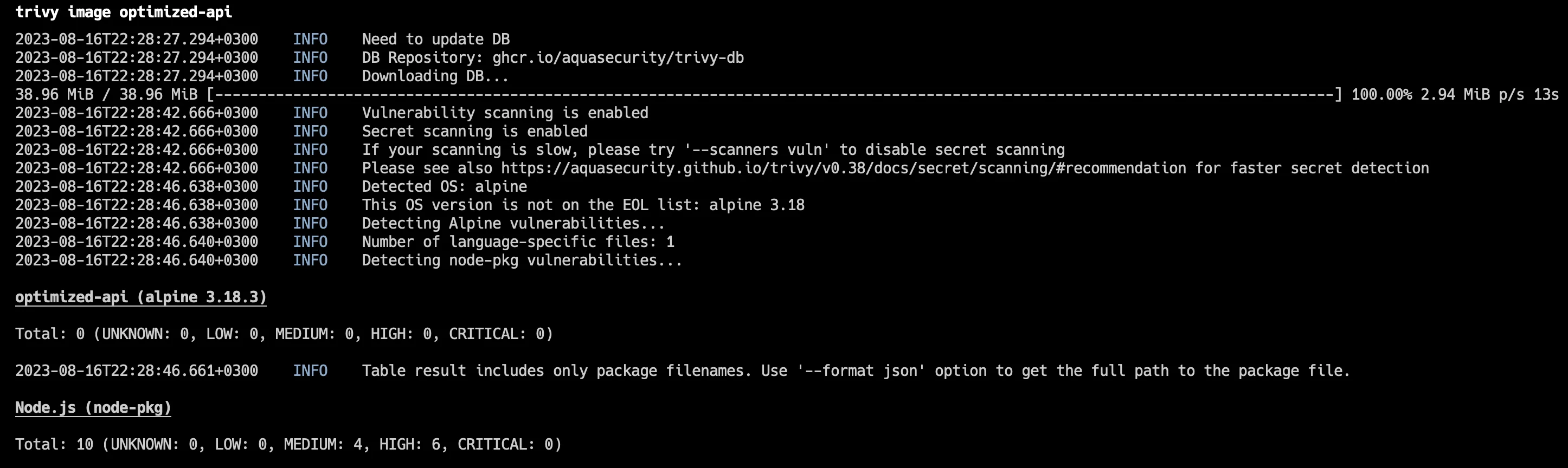
- Image Footprint: Final container size dropped by more than 50%, accelerating CI/CD registry pushes and cluster pull times.
